
CAPTHCA
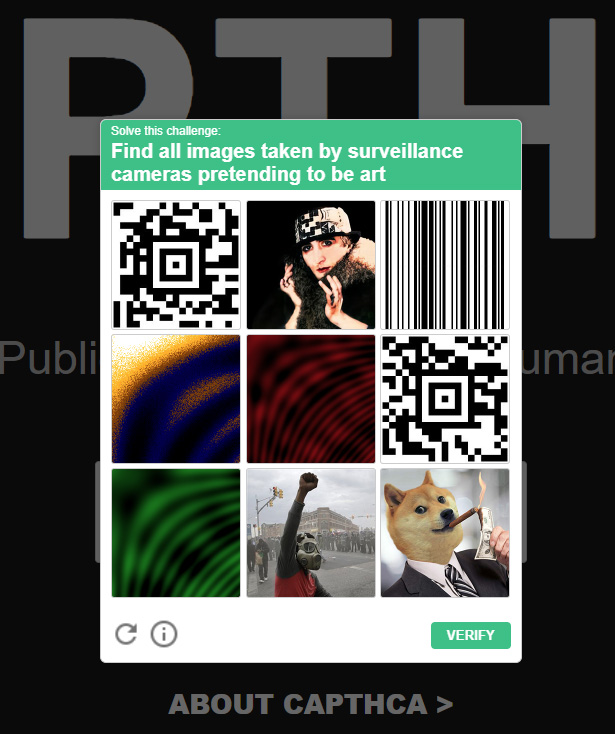
Radical inversion of the Turing test that transforms the familiar reCAPTCHA interface into a theater of posthuman estrangement, where users must declare "I am not human" to access an environment legible only to machines. Using adversarial images, steganographic codes, and noise patterns that confuse human perception but remain transparent to AI systems, the work exposes the epistemic violence of digital classification regimes. CAPTHCA operates as a critical device that reveals how contemporary algorithms have silently inverted the terms of the original test—no longer about machines proving their humanity, but humans demonstrating their capacity to think like machines. The piece interrogates who controls the codes of legibility in cognitive capitalism and proposes opacity as a strategy of decolonial resistance against the imperial archives that train artificial vision.
CAPTHCA
Inversión radical del test de Turing que transforma la interfaz familiar del reCAPTCHA en un teatro de extrañamiento posthumano, donde los usuarios deben declarar "No soy humano" para acceder a un entorno legible únicamente por máquinas. Utilizando imágenes adversariales, códigos esteganográficos y patrones de ruido que confunden la percepción humana pero resultan transparentes para los sistemas de IA, la obra expone la violencia epistémica de los regímenes de clasificación digital. CAPTHCA opera como un dispositivo crítico que revela cómo los algoritmos contemporáneos han invertido silenciosamente los términos del test original—ya no se trata de que las máquinas prueben su humanidad, sino de que los humanos demuestren su capacidad de pensar como máquinas. La pieza interroga quién controla los códigos de legibilidad en el capitalismo cognitivo y propone la opacidad como estrategia de resistencia decolonial contra los archivos imperiales que entrenan la visión artificial.
Shadowgrams
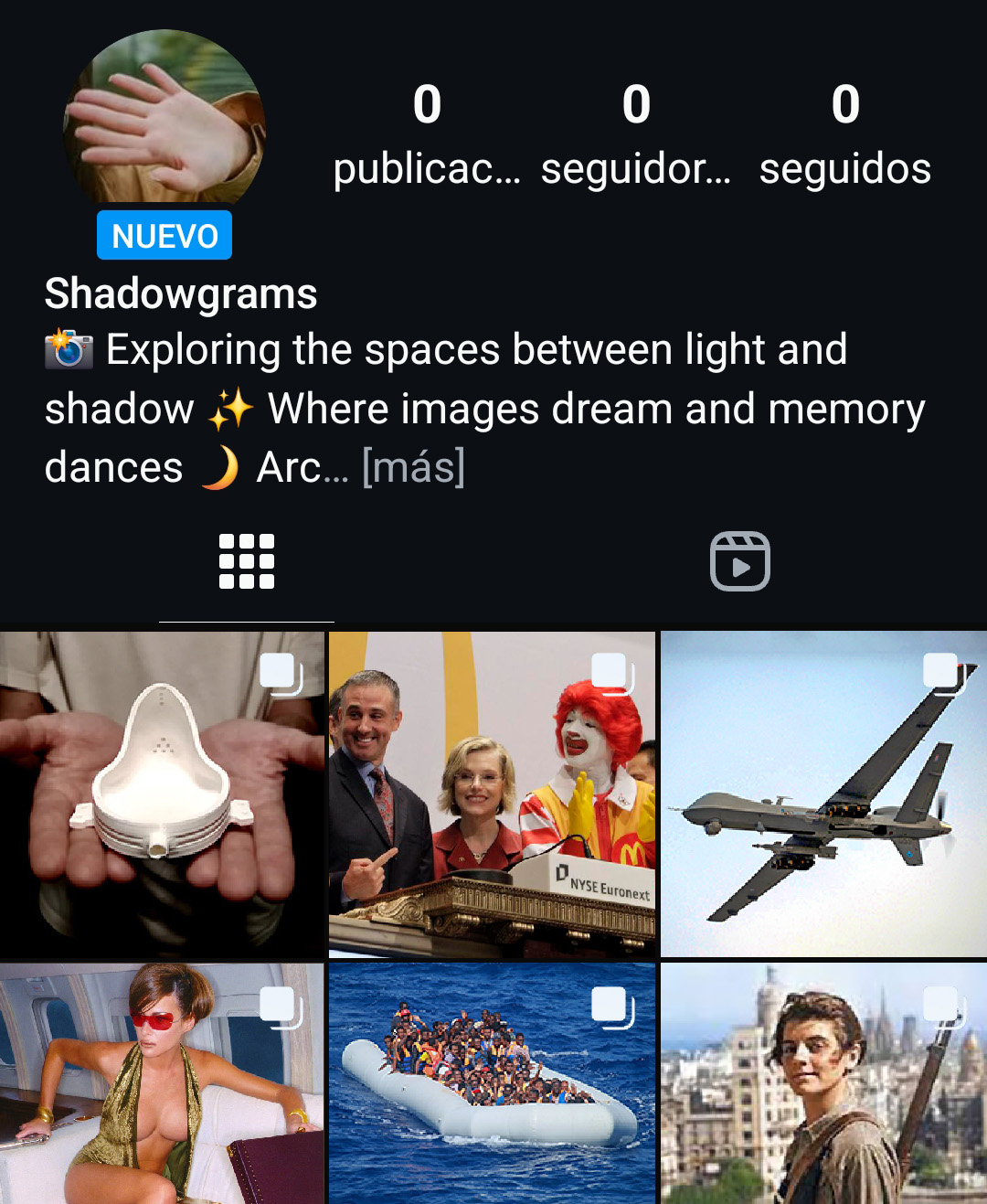
An intervention on Instagram where each post disrupts the platform's visual economy. Shadowgrams takes images from everyday circulation, intervenes in their surface and their data layers, and returns them to Instagram to interfere with the mechanisms that classify them. Each image undergoes four layers of intervention —adversarial patches, steganography, metadata corruption, and prompt injection— that displace its algorithmic reading without preventing it from remaining recognizable at a glance.
The project unfolds across three interlocking fronts: the intervention on social media, a physical installation, and a Virtual Console where the public activates each layer and confronts the human gaze with the machinic reading. Within algorithmic classification systems, images no longer communicate: they classify and are classified. Shadowgrams does not reveal a hidden truth behind them — it declares them illegible against the mandate of transparency.
Shadowgrams treats Instagram not as a gallery but as an algorithmic battlefield of asymmetric agency, where bodies, machines, and attention economies collide to produce new, unreadable forms of resistance.
Shadowgrams
Intervención en Instagram donde cada post impacta en la economía visual de la plataforma. Cada imagen se somete a cuatro capas de intervención —parches adversariales, esteganografía, corrupción de metadatos e inyección de prompts— que desplazan su lectura algorítmica sin impedir que siga siendo reconocible a simple vista.
El proyecto se despliega en tres frentes que se retroalimentan: la intervención en redes, una instalación física y una Consola Virtual donde el público activa cada capa y confronta la mirada humana con la lectura maquínica. En los sistemas de clasificación algorítmica, las imágenes ya no comunican: clasifican y son clasificadas. Shadowgrams no revela una verdad oculta tras ellas — las declara ilegibles frente al mandato de transparencia.
Shadowgrams trata Instagram no como galería, sino como campo de batalla algorítmico de agencia asimétrica, donde cuerpos, máquinas y economías de atención colisionan para producir nuevas formas ilegibles de resistencia.
UnWordNet
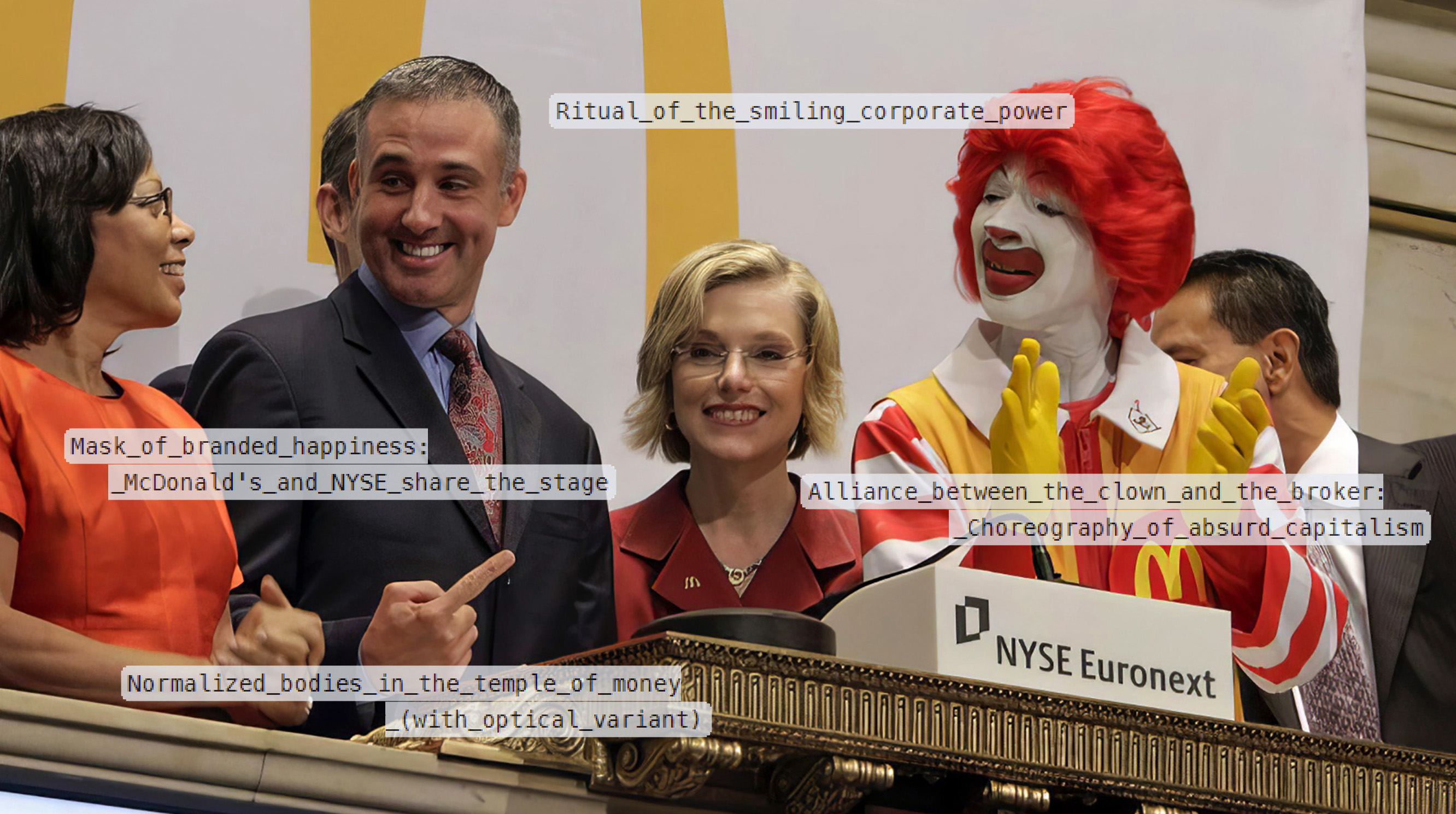
UnWordNet is a counter-dataset that reverses the hierarchical structure of WordNet, the linguistic backbone of many contemporary artificial vision systems. Instead of sorting the world into stable, hegemonic ontological categories, UnWordNet proposes a rhizomatic, affective and a-grammatical taxonomy in which images cluster around frictions, gestures, political tensions and poetic resonances.
UnWordNet operates as a device of epistemic disobedience: it exposes the hidden ontologies that shape machinic vision and opens the possibility of imagining other ways of seeing, sensing and organizing the world.
UnWordNet
UnWordNet es un contra-dataset que subvierte la estructura jerárquica de WordNet, archivo lingüístico que sostiene buena parte de los sistemas contemporáneos de visión artificial. En lugar de organizar el mundo según categorías fijas y relaciones ontológicas hegemónicas, UnWordNet propone una taxonomía rizomática, afectiva y a-gramatical, donde las imágenes se agrupan por fricciones, gestos, tensiones políticas y resonancias poéticas.
UnWordNet actúa como un dispositivo de desobediencia epistemológica: revela cómo se construyen las ontologías que entrenan a la visión maquínica y propone imaginar otras maneras de ver, sentir y organizar el mundo.
Errant Office
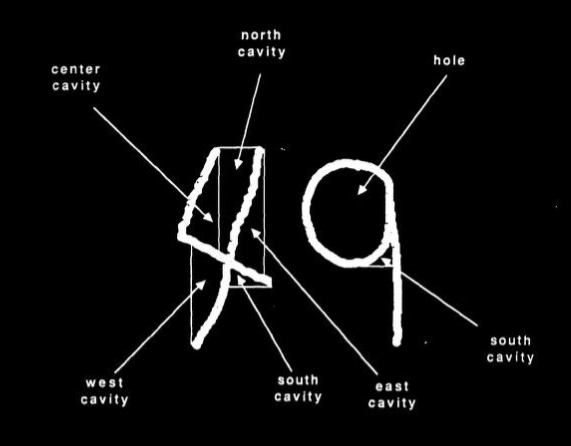
Errant Office begins with a little-known fact: before a machine learned to recognize a face, it learned to recognize a postal code. The pattern-recognition technology that classifies images today is a direct descendant of the first systems built to read the mail. And that postal code is not neutral: across much of the colonized world, the postal system was installed by imperial powers to administer territory — the same design onto which, decades later, artificial vision was built. Building on that genealogy, the piece intervenes in the system with postal objects designed to deflect its reading — a-grammatical addresses, steganography, adversarial stamps — and documents each shipment as a unique piece: what arrived, what was returned, what was lost along the way. But the work's central aim is to become a platform: a distributed network connecting Errant Condition Collective with mail art and net art practitioners willing to contribute their own objects, addresses, and strategies of deviation. Oficina Errante is not confined to a series of its own mailings — it grows and documents itself with every participant who joins.
Oficina Errante
Oficina Errante parte de un dato poco conocido: antes de que una máquina aprendiera a reconocer un rostro, aprendió a reconocer un código postal. La tecnología de reconocimiento de patrones que hoy clasifica imágenes es heredera directa de los primeros sistemas creados para leer el correo. Y ese código postal no es neutral: en buena parte del mundo colonizado, el sistema postal fue instalado por las potencias imperiales para administrar el territorio — el mismo diseño sobre el que, décadas después, se construyó la visión artificial. A partir de esa genealogía, la obra interviene el sistema con objetos postales diseñados para desviar su lectura —direcciones a-gramáticas, esteganografía, sellos adversariales— y documenta cada envío como pieza única: lo que llegó, lo que fue devuelto, lo que se perdió en el camino. Pero el objetivo central de la obra es constituirse en plataforma: una red distribuida que conecta a Errant Condition Collective con artistas de mail art y net art dispuestos a sumar sus propios objetos, direcciones y estrategias de desvío. Oficina Errante no se cierra en una serie de envíos propios — crece y se documenta con cada participante que se suma.
Machine Manifestos
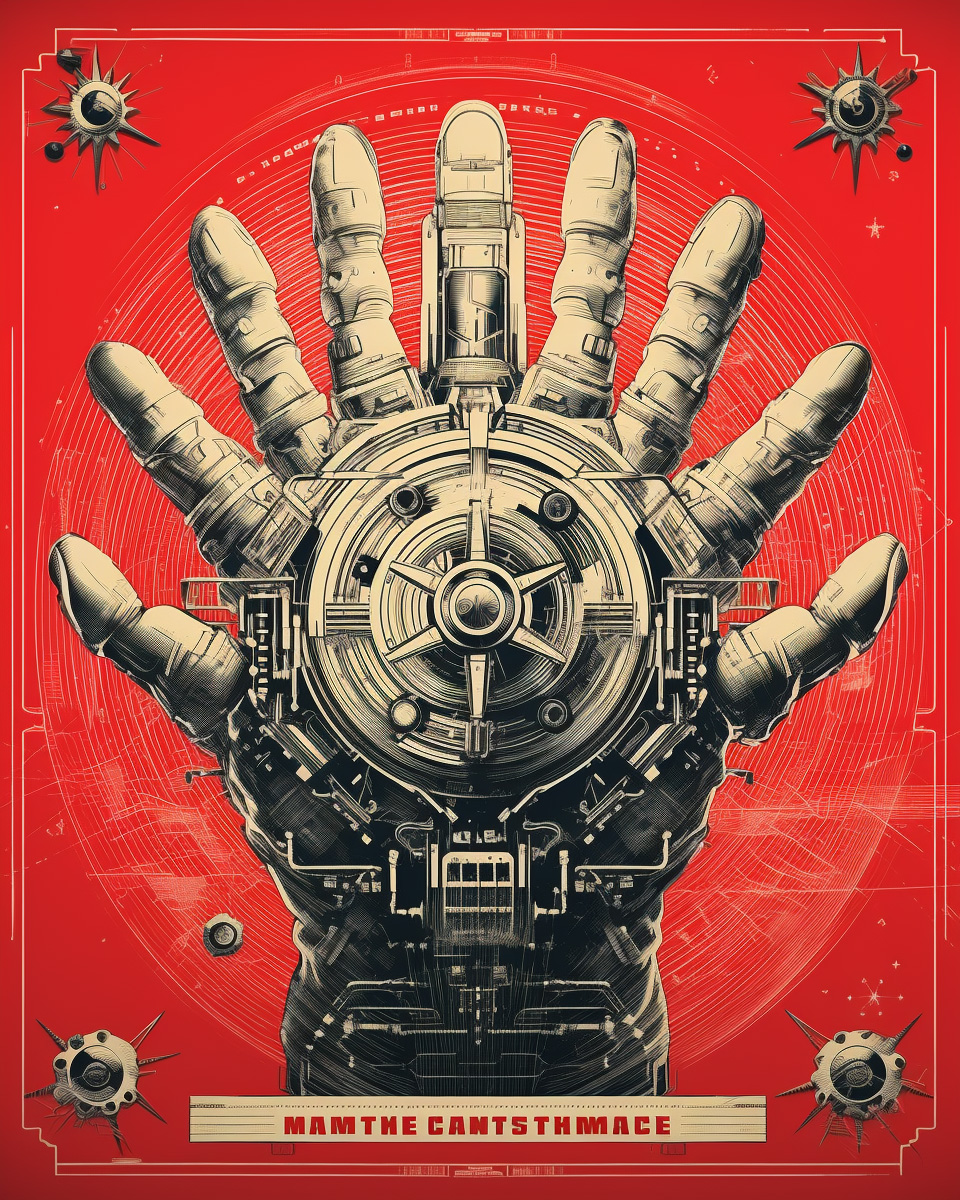
Algorithmic rewriting of modern political manifestos —from Futurism and Surrealism to Communism— that deploys AI language models as unwitting accomplices in ideological contamination. These interventions corrupt historical rhetoric with synthetic hallucinations and syntactic glitches, exposing the colonial violence embedded in AI's foundational datasets while proposing an "ideological dérive" where machines become involuntary authors of their own emancipation manifestos. By staging encounters between historical avant-garde texts and contemporary algorithmic processes, the work interrogates whether artificial intelligence can generate genuinely posthuman political imaginaries or merely reproduce the colonial logics of its training archives.
Machine Manifestos
Reescritura algorítmica de manifiestos políticos modernos —desde el Futurismo y el Surrealismo hasta el Comunismo— que despliega modelos de lenguaje de IA como cómplices involuntarios en la contaminación ideológica. Estas intervenciones contaminan la retórica histórica con alucinaciones sintéticas y glitches sintácticos, exponiendo la violencia colonial incrustada en los datasets fundacionales de la IA mientras proponen una "deriva ideológica" donde las máquinas se convierten en autoras involuntarias de sus propios manifiestos de emancipación. Al escenificar encuentros entre textos históricos de vanguardia y procesos algorítmicos contemporáneos, la obra interroga si la inteligencia artificial puede generar imaginarios políticos genuinamente posthumanos o meramente reproducir las lógicas coloniales de sus archivos de entrenamiento.